

Running out of space at home or work is a surprisingly common problem. It often happens during a move, a home renovation, or when belongings simply start to pile up. Renting a storage unit for a few months often becomes the simplest and most practical solution.
Over time, this everyday need has grown into a large and stable self-storage industry. Thousands of storage facilities operate across the country, offering secure spaces where people can keep belongings for short or long periods. The business itself is fairly straightforward: customers rent a unit, pay a monthly fee, and store their items for as long as necessary.
While the idea sounds simple, starting a storage unit business requires careful planning. Location, demand, construction costs, and facility design all influence whether the business becomes successful.
This guide explains how to start a storage unit business, covering the main steps involved—from researching the market to setting up and running a successful storage facility.
Understanding the Self-Storage Industry
Before starting a storage unit business, it’s important to understand how the industry works.
Self-storage facilities provide secure spaces where people can store belongings for short-term or long-term use. Customers rent units of different sizes depending on their needs.
Some common items stored in these units include:
- Furniture and household goods
- Seasonal items such as holiday decorations
- Business inventory and supplies
- Office equipment
- Documents and records
- Vehicles, motorcycles, or boats
Most storage units come in several standard sizes. Smaller units are typically used for boxes or small items, while larger units can store the contents of an entire apartment or house.
In recent years, many facilities have also introduced climate-controlled storage units. These units protect sensitive items like electronics, artwork, and wooden furniture from extreme temperatures and humidity.
Because people constantly move, relocate, or reorganize their homes and businesses, the demand for storage space remains steady.
Why Demand for Storage Units Keeps Rising
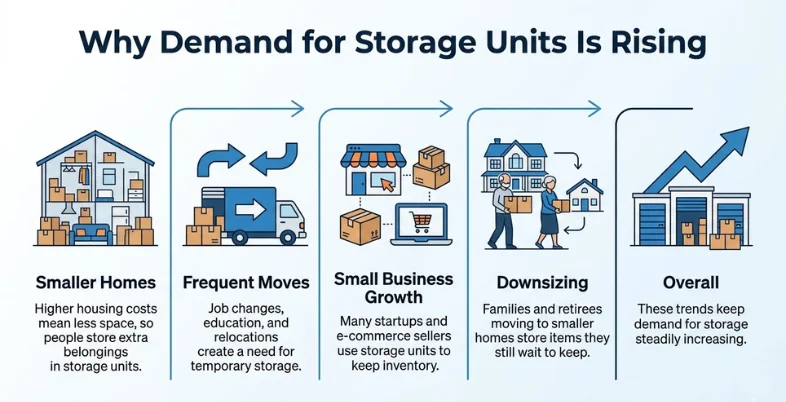
There are several reasons why the self-storage industry continues to expand in the United States.
Smaller Living Spaces
In many cities, housing prices have increased significantly. As a result, people often live in smaller apartments or homes with limited storage space. Renting a storage unit becomes a convenient solution for storing extra belongings.
Frequent Relocations
Americans move frequently for work, education, or personal reasons. During a move, people often need temporary storage for furniture or household items.
Growth of Small Businesses
E-commerce businesses and small startups frequently use storage units to keep inventory instead of renting expensive warehouse space.
Downsizing
Many retirees and families choose to downsize their homes. Instead of selling or discarding their belongings, they rent storage units to keep items they may need later.
These factors help maintain a steady demand for storage facilities across the country.
How Much Does It Cost to Start a Storage Unit Business?
Starting a storage facility requires a significant investment, mainly because it involves purchasing land and building infrastructure.
The exact cost depends on several factors, including the location, land price, construction design, and the number of units in the facility.
Typical startup expenses include:
- Land purchase: Land prices vary widely depending on the city and neighborhood.
- Construction costs: Building storage units, installing roofing, doors, and driveways.
- Security systems: Cameras, gated access, and lighting systems.
- Permits and legal fees: Zoning approvals and construction permits.
- Marketing expenses: Advertising the facility to attract customers.
For many developers, building a medium-sized facility can cost anywhere from $1 million to $2.5 million. However, there are ways to reduce costs, such as converting an existing building into storage units.
Some entrepreneurs also start smaller facilities and expand gradually over time.
How Profitable Is a Storage Unit Business?
One of the main reasons investors are drawn to the self-storage industry is its potential for steady and predictable income. Unlike many retail businesses that rely on daily sales, storage facilities generate recurring monthly revenue. Once customers rent units, they often continue paying rent for several months or even years. A typical facility may contain anywhere from 100 to 300 units. If the average monthly rent is around $100 and occupancy levels reach 80–90 percent, the business can generate consistent income.
Operating costs are usually lower than those of many other types of real estate businesses because storage facilities require minimal staffing. Many modern locations operate with automated gate access, online reservations, and digital payment systems. As occupancy increases, profit margins can become quite attractive. In many cases, storage businesses achieve margins between 30 percent and 50 percent, depending on the location and management efficiency.
Step-by-Step Guide to Starting a Storage Unit Business
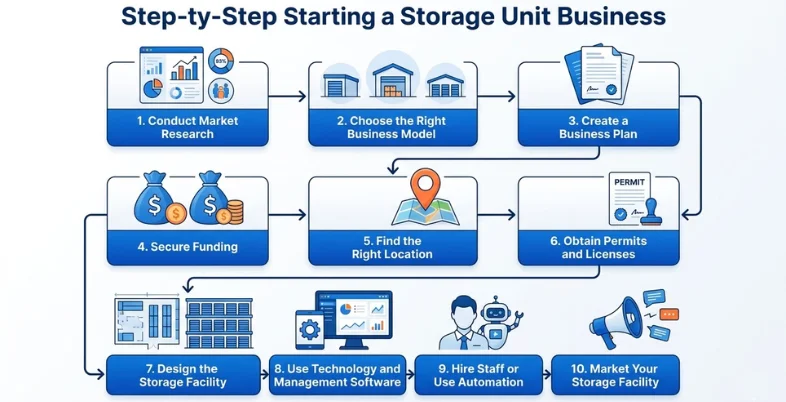
Launching a successful storage unit business requires careful planning and execution. Below are the key steps involved in starting your facility.
1. Conduct Market Research
Market research is one of the most important early steps. Before investing in land or construction, it is essential to understand local demand.
Begin by studying the area where you plan to open your facility. Look for growing neighborhoods, new housing developments, or areas where existing storage facilities are limited. It is also useful to analyze competitors. Examining their prices, occupancy rates, and services can help you determine whether there is room for another facility in the market.
2. Choose the Right Business Model
There are several ways to enter the storage industry. Some entrepreneurs build a brand-new facility from the ground up, which allows full control over design and layout but requires more time and capital. Others choose to purchase an existing facility that already has customers and cash flow. While this option may reduce startup risk, the property may require renovations or upgrades.
Another approach involves converting unused buildings such as warehouses, factories, or large retail spaces into storage units. This method can significantly reduce construction costs and speed up the launch process.
3. Create a Business Plan
A detailed business plan provides a roadmap for building and running your facility. It should outline market research findings, estimated startup costs, projected revenue, pricing strategies, and marketing plans. A strong business plan is also essential when seeking financing from banks, investors, or lending institutions.
4. Secure Funding
Because storage facilities require significant capital, most entrepreneurs rely on financing to fund construction and development. Common funding sources include commercial real estate loans, Small Business Administration loans, private investors, and real estate investment partners. Preparing realistic financial projections will make it easier to secure funding.
5. Find the Right Location
Location plays a major role in the success of a storage facility. Ideally, the property should be easily accessible from major roads and visible to passing traffic. Facilities located near residential neighborhoods or business districts often attract more renters. It is also important to evaluate the level of competition in the area. Regions with limited existing storage facilities often offer better opportunities for new businesses.
6. Obtain Permits and Licenses
Before construction begins, the project must comply with local regulations. This typically involves registering the business, obtaining zoning approval, securing construction permits, and completing fire safety inspections. Local zoning laws are particularly important because some areas restrict where storage facilities can be built.
7. Design the Storage Facility
A well-designed facility improves efficiency and enhances the customer experience. Most facilities include a variety of unit sizes to accommodate different storage needs. Security features are essential for attracting renters. Facilities commonly install surveillance cameras, gated entry systems, motion-sensor lighting, and strong locks for individual units. Adding climate-controlled units can also increase revenue because they typically command higher rental rates.
8. Use Technology and Management Software
Technology plays a major role in modern storage facilities. Management software can handle reservations, billing, customer accounts, and access control. These systems make operations more efficient and allow facilities to run with minimal staff.
9. Hire Staff or Use Automation
Many storage facilities operate with only one manager or a small team. Automation tools allow customers to rent units online, make payments digitally, and access the property through automated gate systems. This approach reduces operating costs while also providing convenience for renters.
10. Market Your Storage Facility
Once the facility is ready to open, effective marketing becomes essential. Local search engine optimization and digital marketing services help the facility appear in nearby online searches. Google Business listings also help attract customers looking for storage options in their area.
Online advertising, social media promotion, and referral programs can further increase visibility. Positive word-of-mouth from satisfied customers often becomes one of the most powerful marketing tools.
Challenges in the Storage Unit Business
Although the storage industry offers strong opportunities, it also comes with challenges.
The biggest obstacle for most entrepreneurs is the initial investment required to build a facility. In some cities, zoning restrictions can make it difficult to obtain construction approvals.
Competition is another factor to consider. Areas with too many storage facilities may struggle to maintain high occupancy rates. Careful planning and location selection can help reduce these risks.
Tips for Running a Successful Storage Facility
Successful storage businesses focus on providing reliable service and maintaining secure facilities.
Here are a few practical tips:
- Keep the property clean and well-maintained.
- Invest in strong security systems.
- Offer flexible rental options for customers.
- Monitor occupancy rates and adjust pricing when necessary.
- Use technology to simplify management tasks.
Providing a smooth and secure experience encourages long-term customers and positive reviews.
Final Thoughts
A storage business can quietly turn extra space into steady income. People will always need somewhere to keep their things during a move, a renovation, or just to declutter their homes. This is one of the reasons many entrepreneurs start exploring how to start a storage unit business as a long-term investment opportunity.
It does take money and effort upfront, but once the facility is running, much of the work is routine. The real challenge is picking a good location, understanding what renters want, and keeping the facility secure and easy to use.
With patience, smart choices, and regular attention to customers, a storage unit business can become a reliable source of income that grows steadily over the years. It’s not flashy, but it works, and that’s part of its appeal.
FAQs
1. Is Starting a Storage Unit Business a Good Investment?
Yes, many investors consider storage facilities a strong long-term investment because they generate recurring monthly income and require relatively low operating costs.
2. How Much Land is Needed For a Storage Facility?
A small storage facility typically requires 2 to 5 acres of land, depending on the number of units and layout.
3. Do Storage Units Require a Lot of Maintenance?
Maintenance needs are generally low compared to other real estate businesses. Most costs involve security systems, lighting, and occasional repairs.
4. What Size Storage Units are Most Commonly Rented?
Medium-sized units such as 10×10 and 10×20 are among the most popular because they can store the contents of a small apartment or house.
5. How Long do Customers Usually Rent Storage Units?
Many customers rent units for several months or even years, especially during relocations, downsizing, or business storage needs.